
Hardwood Floor Cleaning in Longwood, FL
Longwood's Humidity Is Hard on Hardwood Here's What Actually Helps

Hear from Our Customers

Hardwood Floor Care Services in Longwood
There’s a point where mopping stops working. The floors still look dull, still feel grimy no matter what you use, and you start wondering if something’s actually wrong with the wood. Usually, nothing is. What’s happened is that grime, product residue, and fine debris have worked their way into the grain and no consumer mop or spray is going to pull that out.
That’s what professional hardwood floor deep cleaning is designed to do. For Longwood homeowners specifically, this matters more than it does in most places. Central Florida’s humidity runs between 70 and 90 percent for much of the year well above the 35 to 55 percent range that hardwood floors actually need to stay stable. That constant moisture cycling causes the wood to expand and contract with the seasons, which breaks down protective finishes faster than most people expect.
When the finish goes, dirt gets in deeper, the floor dulls faster, and what should have been a cleaning job starts looking like a refinishing conversation. The good news is that regular professional hardwood floor maintenance catches this before it gets to that point. Cleaned and properly maintained floors last significantly longer, hold their finish better, and look the way they’re supposed to look which, if you live in Sweetwater Oaks or Wekiva and you’ve got guests coming through, actually matters.
Hardwood Floor Cleaning Services, Seminole County
Harrington Hardwood Floors has been serving Longwood and Central Florida since 1990 which means the owner was cleaning and restoring hardwood floors in Seminole County before most of Longwood’s current master-planned communities were fully built out. That kind of tenure isn’t a marketing line. It’s the difference between someone who’s seen every floor condition this climate can produce and someone who’s working from a training manual.
When you book Harrington Hardwood Floors, the owner is the one who shows up. Not a crew you’ve never met, not a subcontractor dispatched from a franchise call center the owner, personally, on your job. That matters when you’re opening your home to someone, and it matters even more when the floors they’re working on are original hardwood in a 1970s ranch home off SR 434 or a restored cottage near the Historic District.
We do one thing: hardwood floors. No carpet, no tile, no vinyl. Just hardwood which means every decision made on your job comes from 30-plus years of doing exactly this, not from a generalist who added wood floors to a service menu.

Residential Hardwood Floor Cleaning, Longwood FL
It starts with an assessment not a sales pitch, but a real look at what your floor actually needs. We examine the wood species, the finish type, the current condition, how much buildup is present, and whether there’s any finish breakdown from moisture exposure. In Longwood, that last part comes up often. The humidity here does real work on polyurethane and other protective finishes over time, and a floor that looks like it just needs cleaning sometimes has a finish that needs attention too.
Knowing the difference before touching the floor is what keeps a cleaning from becoming a mistake. Once the assessment is done, the process moves to dry removal first vacuuming out the debris, dust, and particulate that’s settled into the grain. This is especially relevant for homes near Wekiva Springs State Park or Lake Brantley, where sand, pollen, and organic debris track in regularly and accumulate faster than they would in a typical suburban home.
After dry removal, the deep cleaning uses pH-neutral, hardwood-specific solutions not multi-surface sprays, not steam, not anything that would damage the finish or force moisture into the seams. Edges and corners get hand-cleaned. The finish is assessed after cleaning to determine whether a recoating makes sense which is a lighter, less invasive step than full refinishing that can restore a floor’s protective layer without sanding it down to bare wood. You’ll know exactly what was done and what, if anything, your floor needs next.

Ready to get started?
Hardwood Floor Stain Removal and Maintenance, Longwood
Hardwood floor cleaning in Longwood covers more ground than people expect when they first call. The core service is a professional deep clean extraction of embedded grime, allergens, and product residue buildup that surface mopping leaves behind. But depending on what your floor is dealing with, the work often extends into specific problem areas: pet stains, water marks from plant pots or humidity-related condensation, grease spots, or the kind of general dullness that comes from years of the wrong cleaning products slowly eroding the finish.
Hardwood floor stain removal is part of what we handle and the approach depends entirely on the stain type, the wood species, and the finish. A water stain on an oil-finished floor is a different problem than the same stain on a polyurethane finish. Getting that wrong doesn’t just fail to fix the stain; it can make the floor worse. Older homes in Longwood particularly those built in the 1960s and 1970s in neighborhoods like Rolling Hills and Cor Jesu are more likely to have original hardwood with finishes that require careful product selection.
Beyond the cleaning itself, hardwood floor care services include recoating, which restores the protective finish layer without a full sand-down. For Longwood homeowners who want to protect their floors through another Florida summer without committing to a full refinishing job, it’s often the right middle step.
How often should I professionally clean my hardwood floors in Longwood, FL?
For most Longwood households, professional hardwood floor cleaning once a year is the minimum but it’s genuinely a minimum, not a target. If you have pets or kids, the realistic schedule is every three to six months.
Longwood’s outdoor lifestyle plays into this more than people realize. Neighborhoods like Sweetwater Oaks, The Springs, and the Wekiva communities sit close to Wekiva Springs State Park, Lake Brantley, and the Little Wekiva River. Residents in these areas track in sand, pollen, and organic debris consistently and that material works its way into the wood grain faster than it would in a typical suburban home with less outdoor foot traffic. Add in Central Florida’s humidity levels and the way moisture cycling accelerates finish breakdown, and the floors in a Longwood home are genuinely under more stress than the same floors would be in a drier climate. Annual cleaning catches the buildup before it damages the finish; more frequent cleaning keeps the floor in the condition it should be in year-round.
Can the wrong cleaning products actually damage my hardwood floors permanently?
Yes and this is one of the most common problems we encounter when assessing a floor for the first time. Vinegar is probably the most frequently cited culprit. It’s marketed as a natural, safe cleaner, and it is for a lot of surfaces. For hardwood floors, the acidity erodes the protective finish over time, leaving the wood underneath increasingly exposed. Oil soaps leave a residue that builds up with each application and actually attracts more dirt. Steam cleaners force moisture into the seams between boards, which causes swelling, warping, and finish separation.
The damage from these products is often cumulative, which means it’s not obvious right away. Floors that have been cleaned with the wrong products for years will show it eventually in dullness that won’t respond to more cleaning, in finish that looks hazy or uneven, in boards that have started to lift slightly at the edges. Some of that damage can be addressed through professional deep cleaning and recoating. Some of it requires refinishing. The earlier a professional assessment happens, the more options you have and the less expensive the solution tends to be.
What is the difference between hardwood floor cleaning, recoating, and refinishing?
These are three distinct services, and understanding the difference helps you make the right call without overspending or underspending. Cleaning removes the surface and embedded grime, allergens, and residue buildup from the floor without touching the finish itself. It’s maintenance the thing you do regularly to keep the floor in good condition.
Recoating, sometimes called a screen and coat, adds a new layer of protective finish over the existing one after a light scuff to help it bond. It doesn’t involve sanding down to bare wood. It’s the right step when the finish is starting to look dull or worn but the wood itself is still in good shape. For Longwood homeowners, this is often the move after a few years of Florida humidity doing its work on the finish it restores protection without the cost or disruption of full refinishing.
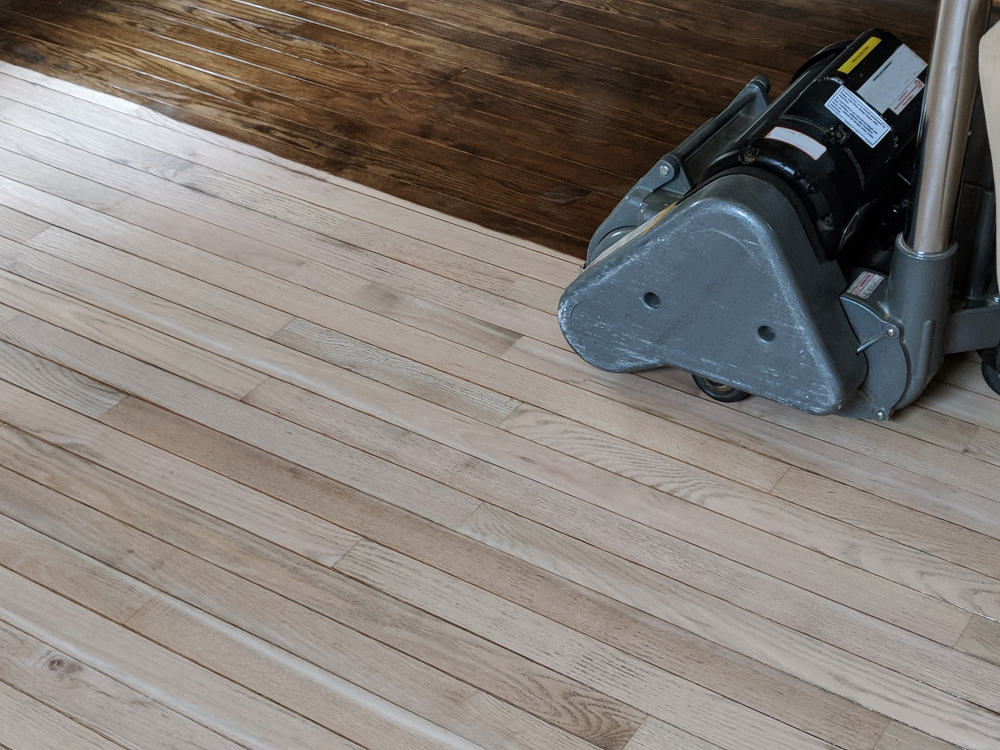
Refinishing is the most intensive option. It involves sanding the floor down to bare wood, which removes scratches, stains, and the old finish entirely, then applying a new finish from scratch. It’s the right call when the wood itself is damaged or the finish is too far gone for recoating to fix. Full refinishing costs significantly more than cleaning or recoating which is exactly why staying current on maintenance and recoating keeps refinishing optional rather than urgent.
How does Florida's humidity affect hardwood floors in Longwood homes specifically?
Florida is the second most humid state in the country, with average relative humidity around 74 percent and in Central Florida, outdoor humidity runs between 70 and 90 percent through much of the year. Hardwood floors are stable and perform best between 35 and 55 percent humidity. The gap between those numbers tells you most of what you need to know about why hardwood floors in Longwood require more attention than they would in most other parts of the country.
Wood is hygroscopic it absorbs and releases moisture in response to its environment. In Longwood, that means boards expand during the humid summer months and contract during the drier winter period when air conditioning and lower ambient humidity pull moisture out. That repeated cycling creates micro-stress on the finish and on the joints between boards. Over time, it opens small gaps that trap debris, weakens the bond of the protective finish, and can lead to visible warping or cupping if moisture levels get high enough without proper maintenance. Regular professional hardwood floor maintenance cleaning and periodic recoating is what interrupts that cycle before the damage becomes structural rather than cosmetic.
How do I know if my hardwood floors need cleaning or something more involved?
The honest answer is that you usually can’t tell for certain without an assessment but there are signals worth paying attention to. If your floors look dull even right after mopping, that’s typically a sign of product residue buildup or finish wear, not just surface dirt. If the dullness is uneven worse in high-traffic areas like hallways and in front of the kitchen sink that’s a finish wear pattern. If there are specific spots that won’t respond to cleaning at all, those may be stains that have penetrated the finish or the wood itself.
A professional assessment looks at all of this before any work starts. The goal is to match the right level of service to what the floor actually needs not to default to the most expensive option. For many Longwood homeowners, especially those in homes built in the 1970s and 1980s with original hardwood floors, the floor is in better shape than it looks. Years of the wrong products can leave a residue layer that makes a perfectly good floor look terrible. A professional deep cleaning removes that layer and often reveals a floor that needs nothing more than routine maintenance going forward.
Is professional hardwood floor cleaning worth the cost compared to doing it myself?
For most homeowners, yes and the math is pretty straightforward once you look at the full picture. Consumer cleaning products and tools work on the surface. Professional equipment extracts what’s embedded in the wood grain: allergens, bacteria, fine debris, and the residue left behind by years of cleaning sprays. That’s not something a mop reaches, regardless of what the label says.
The more important cost comparison is professional cleaning versus refinishing. Full hardwood floor refinishing runs $3 to $7 per square foot. For a typical Longwood home with 800 to 1,200 square feet of hardwood, that’s a significant expense and it’s one that regular professional cleaning and periodic recoating can defer for years, sometimes indefinitely. Floors that are maintained properly simply don’t reach the point of needing full refinishing as quickly. For homeowners in Longwood’s established neighborhoods where the floors in a 1970s ranch home or a historic district property may be original hardwood that can’t simply be swapped out for something equivalent keeping those floors in good condition through regular professional care is one of the more cost-effective decisions you can make.