
Luxury Vinyl Plank Flooring in Paradise Heights, FL
What's Under a 1957 Paradise Heights Slab Changes Everything

Hear from Our Customers

LVP Flooring Installation, Paradise Heights FL
Paradise Heights is not a transient community. The owner-occupancy rate here is nearly 85%, which means most people calling about new floors are doing it because they plan to live with that decision for a long time. That changes what a good installation actually means.
It’s not about getting something down fast it’s about getting it right the first time, on a slab that may be pushing 70 years old, in a climate that never really lets up. The homes in this part of northwest Orange County were built predominantly in the mid-20th century, long before modern vapor barriers were standard in Florida construction. Concrete slabs from that era absorb and release moisture differently than newer builds.
If that slab isn’t properly tested and prepared before luxury vinyl plank goes down, you’re not getting a 25-year floor you’re getting a floor that buckles, gaps, or develops odor problems within a few years. The difference between those two outcomes is almost entirely in the preparation.
Beyond the slab, there’s the lifestyle factor. Large lots, outdoor living, pets, kids tracking in from the yard Paradise Heights homes see real use. Luxury vinyl plank flooring handles that well, but only if the wear layer is matched to the actual demands of the household. A 6-mil product in a high-traffic entryway off a large lot is going to show wear fast.
Getting that product selection right from the start is what turns a good-looking floor into one that still looks good a decade from now.
Luxury Vinyl Flooring Contractor, Orange County FL
Harrington Hardwood Floors has been working in Orange County since 1990. That’s before SR-429 existed, before Oak Pointe was built next door to Paradise Heights, and before most of the contractors currently quoting jobs in this area were in the flooring business. That kind of tenure isn’t a marketing point it’s just what it means to still be here after 35 years.
The work is owner-operated. Geste Harms is personally involved in every project, and customers mention him by name in reviews because he’s actually there. That matters in a community like Paradise Heights, where homes have history and subfloors have stories. You’re not dealing with a rotating crew of subcontractors you’re dealing with someone who has worked on post-war Central Florida homes long enough to know what to expect and how to handle it.
We are licensed and insured under Florida’s DBPR requirements, and every project comes with a satisfaction guarantee. For a homeowner in unincorporated Orange County making a long-term investment, that’s not a formality it’s real protection.
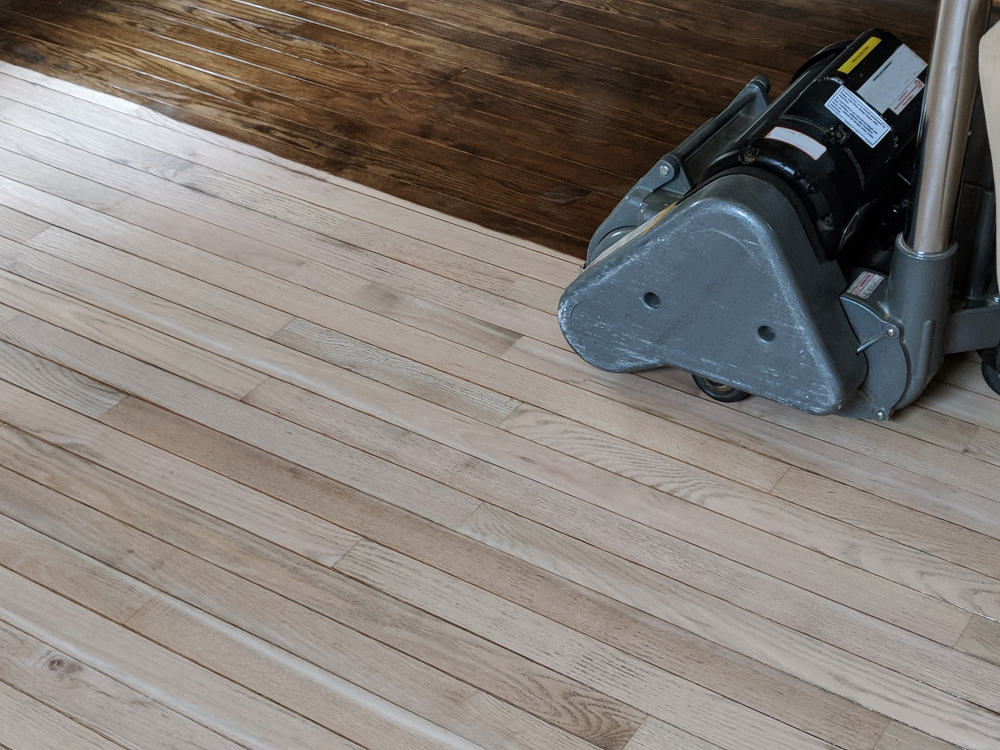
Residential LVP Flooring Installation, Paradise Heights FL
It starts with a consultation, not a sales pitch. Before any product is selected or any square footage is measured, the conversation needs to cover what’s already there. In Paradise Heights, that typically means a concrete slab built without a modern vapor barrier, flooring that may have been installed and replaced multiple times over the decades, and subfloor conditions that need to be assessed not assumed.
Once the existing conditions are understood, moisture testing happens. This is not optional in Florida, and it’s especially important on older slabs. Central Florida’s humidity runs between 74 and 90 percent year-round, and the proximity to Lake Apopka means ambient moisture levels in this part of Orange County stay elevated even in drier months. A slab that looks and feels dry can still be transmitting vapor at levels that will compromise a floor if the right vapor barrier and product aren’t selected.
After testing, we level the subfloor to within the tolerance that luxury vinyl plank requires no more than 3/16 of an inch over ten feet. That step alone is what most failed DIY installs skip.
From there, the LVP planks acclimate to the home environment for at least 48 to 72 hours before installation begins. This is standard practice, but it’s particularly important in a Florida home where the gap between indoor AC temperature and outdoor heat creates real expansion and contraction in the material. Installation follows, including any staircase work if needed, and cleanup is part of the job not an afterthought. When it’s done, you’ll know exactly what was done and why.

Ready to get started?
Waterproof Vinyl Plank Flooring Services, Paradise Heights FL
Luxury vinyl plank flooring installation through Harrington Hardwood Floors covers the full scope of the project. That means subfloor assessment, moisture testing, leveling, vapor barrier installation where needed, product selection guidance, full installation, and cleanup. Nothing is handed off to a subcontractor and nothing is left for you to figure out after the crew leaves.
Product selection is a real part of the process, not a formality. For Paradise Heights homes with large lots and active households, wear layer guidance matters. We walk you through the difference between a 12-mil and a 20-mil wear layer in plain terms what each one handles, where each one makes sense, and what the long-term difference looks like in a home that sees real daily use. SPC (Stone Polymer Composite) core products are typically recommended for Orange County slab-on-grade homes because of their dimensional stability in Florida’s humidity and that recommendation gets explained, not just made.
Staircase installation and refinishing is also available, which is worth knowing if your home has stairs connecting original and later-added sections a common situation in mid-century Paradise Heights homes that were expanded over the decades. We handle the whole project so the result is cohesive, not a mix of work from two different contractors. Low-VOC products are used throughout, which matters in a home where people actually live and aren’t vacating for a week after installation.

Can luxury vinyl plank flooring be installed over an old concrete slab in Paradise Heights?
Yes, but the slab has to be properly prepared first and in Paradise Heights, that preparation step is more involved than it would be in a newer home. The median home in this community was built around 1957, which means the concrete slab was poured before modern vapor barriers were standard practice in Florida construction. After 65 to 70 years of humidity cycling through it, that slab can transmit moisture vapor at levels that will cause problems under luxury vinyl plank if they’re not addressed.
The process starts with moisture testing to get an actual reading, not a visual assessment. From there, the right vapor barrier is selected based on what the test shows, and the surface is leveled to meet the flatness tolerance that LVP requires. If the slab has significant variation which is common in older Orange County homes leveling compound is applied before anything else goes down. Done correctly, an older slab in Paradise Heights is absolutely a workable surface for a long-lasting LVP installation. Skipping those steps is where problems start.
What wear layer thickness should I choose for a high-traffic home in Paradise Heights?
For most Paradise Heights households, 12-mil is a reasonable minimum for moderate-traffic areas, but 20-mil or higher is the better call for entryways, hallways, kitchens, and any room that sees consistent outdoor-to-indoor traffic. The community’s large-lot character means more foot traffic from yards, gardens, and outdoor living spaces and that kind of daily use adds up faster than it would in a condo or a smaller urban home.
Wear layer thickness is the single biggest quality indicator in luxury vinyl plank. A 6-mil product might look identical to a 20-mil product on the day it’s installed, but within five to eight years in a high-traffic home, the difference is obvious. We walk through this decision with you during the consultation based on how your household actually uses the space not just what looks good on a spec sheet. Getting that match right from the start is what makes the difference between a floor that holds up and one that you’re replacing again in a few years.
Does Florida's humidity affect luxury vinyl plank flooring after it's installed?
It can, but a properly installed LVP floor handles Florida’s humidity well especially if an SPC (Stone Polymer Composite) core product is used. SPC is dimensionally stable, meaning it doesn’t expand and contract the way wood-core products do when humidity levels shift. In Central Florida, where relative humidity runs between 74 and 90 percent year-round and the area around Lake Apopka tends to stay on the higher end of that range, that stability matters.
The bigger humidity risk isn’t what happens at the surface it’s what happens underneath. Moisture trapped between the slab and the floor is what causes buckling, odor, and mold problems. That’s why vapor barrier installation and pre-installation moisture testing are non-negotiable steps, not optional add-ons. Indoor humidity should ideally be maintained between 45 and 55 percent for optimal floor performance, which means keeping your AC system functioning properly year-round. A floor installed correctly in a Paradise Heights home with the right product and the right prep is built to handle Florida’s climate.
Is a permit required for LVP flooring installation in unincorporated Orange County?
For standard luxury vinyl plank installation over an existing subfloor, a permit is typically not required in unincorporated Orange County. Paradise Heights falls under Orange County jurisdiction there’s no city building department here so the relevant authority is Orange County’s building division, and routine flooring replacement generally doesn’t trigger a permit requirement.
Where it gets more involved is if the project includes structural subfloor repair, significant leveling work that affects the structural layer, or if the space is commercial rather than residential. In those cases, Orange County’s building requirements would apply, and a licensed contractor who understands Florida Building Code including its moisture management provisions, which exceed some national standards is the right person to make that call. We are licensed under Florida’s DBPR requirements and know where the line is. If a permit is needed for any part of your project, that gets identified before work begins, not discovered after.
How long does luxury vinyl plank flooring actually last in a Florida home?
With a quality product and a proper installation, 15 to 25 years is a realistic lifespan for residential LVP. Premium SPC products with thicker wear layers 20 mil and above can reach the upper end of that range or beyond in a well-maintained home. The key phrase there is “proper installation,” because most LVP failures that happen well before that timeline trace back to installation problems, not product problems.
In Florida specifically, the factors that shorten that lifespan are almost always moisture-related. A floor installed over an untested slab without a proper vapor barrier, or installed with insufficient expansion gaps that don’t account for Florida’s humidity cycling, is going to show problems years before it should. For a Paradise Heights homeowner making a long-term investment in a home you plan to stay in, the installation quality is what you’re actually paying for the product is just the visible part of it. Our satisfaction guarantee backs that up, which matters more in an older home where the subfloor can have surprises.
How does luxury vinyl plank compare to hardwood for homes in Paradise Heights?
For most Paradise Heights homes mid-century construction on concrete slab, in a high-humidity environment near Lake Apopka LVP is the more practical choice for the majority of the floor plan. Hardwood on a concrete slab requires very specific moisture conditions that Florida’s climate makes difficult to maintain consistently. LVP, particularly SPC-core products, handles the humidity cycling and slab vapor transmission that older Orange County homes deal with year-round without the risk of warping or cupping that solid hardwood carries in this environment.
That said, hardwood has real advantages that LVP doesn’t fully replicate. It can be sanded and refinished multiple times over its life, which means a hardwood floor can look new again decades after installation. It also carries a resale perception that some buyers respond to. Harrington Hardwood Floors works with both and because we’ve been doing this since 1990, the recommendation you get is based on your actual home, your actual slab conditions, and what’s going to perform best in your specific situation. There’s no agenda to push one over the other.