
Luxury Vinyl Plank Flooring in Edgewood, FL
Lake Days in Edgewood Without Wrecking Your Floors

Hear from Our Customers

Waterproof Vinyl Plank in Edgewood
Picture a normal Edgewood afternoon. Someone’s been on the dock at Lake Jessamine, the dog’s been in the water, and everybody cuts through the lanai straight into the kitchen. That routine is hard on carpet and solid hardwood, and it’s where luxury vinyl plank flooring in Edgewood, FL earns its keep. Wet feet, spilled drinks, and sandy paws wipe up instead of soaking in.
Here’s the part a lot of sellers skip. Waterproof vinyl plank flooring in Edgewood still sits on whatever is underneath it, and with about 18 percent of the city under water, that matters. A plank can shrug off a spill and still fail if moisture is rising through the slab or a leak is running under the seams. So the outcome you actually want is a floor installed over a slab that’s been tested and leveled, with room left for the planks to expand.
Then there’s the light. Lake-facing sliders pour sun across a floor for hours, and dark planks next to big glass can fade or move more than lighter ones. Choosing the right color and core for those rooms is a conversation worth having before you order anything. Get it right and you’re not rearranging furniture to hide a faded stripe.
Edgewood Luxury Vinyl Flooring Company
Harrington Hardwood Floors is owner-led. Geste Harms has spent more than 30 years installing, repairing, sanding, and finishing hardwood floors and staircases around Central Florida, and we’ve worked in Seminole and Orange County since 1990. Edgewood sits in Orange County, inside our service area.
If you’re looking for a luxury vinyl plank flooring company in Edgewood, FL, it helps to know where we come from. Hardwood teaches you to respect the subfloor, because the surface only looks as good as what’s under it. That habit carries straight over to vinyl.
Customer reviews keep landing on the same few things: on time, easy to reach, finished ahead of schedule, and the place cleaned up afterward. We’ll also tell you when vinyl isn’t the right call. In a dry interior room, engineered hardwood may serve you better, and a hardwood installer has no reason to steer you wrong.
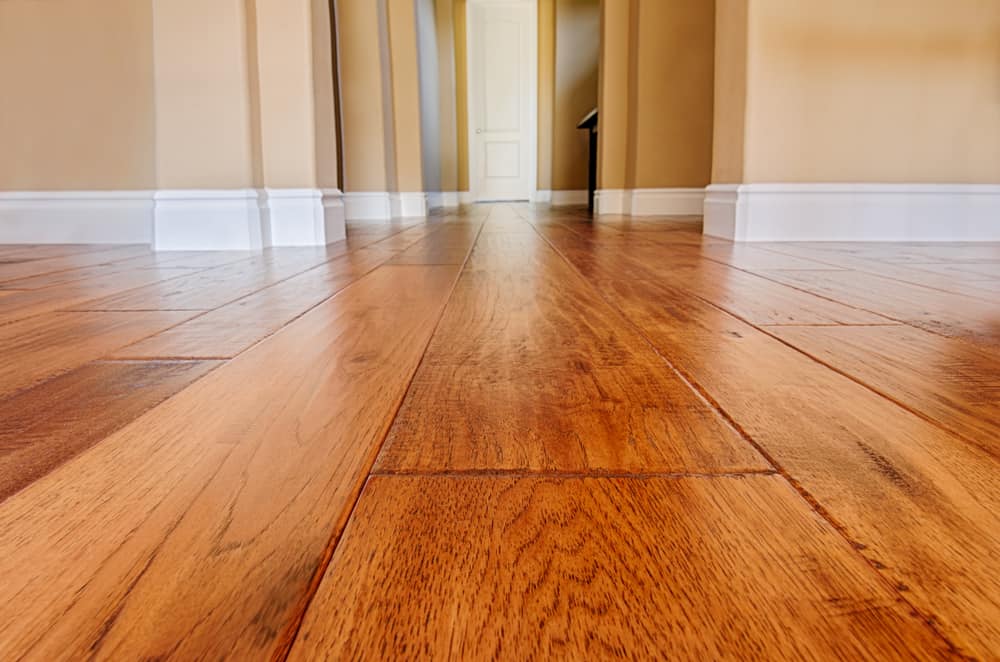
LVP Flooring Installation in Edgewood
LVP flooring installation in Edgewood is mostly about what happens under the planks. It starts with a look at your current floor and a few questions about how you live. Where does the wet traffic come in? Is there a slider facing the lake? Pets, kids, a pool? Those answers decide the core and wear layer. Rigid SPC resists dents in busy households, while WPC feels warmer underfoot, so a lakefront family room and a condo bedroom may not get the same plank.
Next comes the part that decides whether the floor lasts. Old flooring and adhesive come up, the slab is checked for moisture, and low spots get leveled. Edgewood’s median home was built in 1978, and many homes from that era sit on slabs, so we check instead of assuming. The planks then acclimate, go down with expansion gaps at the walls and sliders, and finish with clean transitions at doorways.
Tell us early if you’re in a gated community like Legacy Oaks or Holden Cove, or in a condo with association rules, so gate access, work hours, and underlayment requirements are settled before day one. If your project needs a permit, Edgewood starts with a city zoning review before Orange County takes over, and we can help you check what applies. When we’re done, the job site is cleaned up and you get a walk-through.

Ready to get started?
Luxury Vinyl Flooring in Edgewood
Every luxury vinyl flooring job in Edgewood starts with one question: what’s under the floor you have now? In the mid-century and ranch-style homes around Lake Jessamine Estates, that could be old carpet, tile, or sheet flooring with adhesive that has to come off before anything new goes down. Removal, leveling, and moisture testing belong in the job from the start, not tacked on later as surprises.
Jobs aren’t sold in set packages. Scope follows your house: how many rooms, whether you’re covering one open family room or working around a kitchen island, whether there’s a staircase. Stairs are work we know well, and reviewers have called it out.
Condo owners near Hansel Avenue and residents of gated communities have their own checklist: association approval, approved underlayment, and work hours. Bring those documents and we’ll plan around them. Click-lock floating planks suit most rooms, while glue-down is sometimes the steadier choice over concrete, and we’ll tell you which one we’d use and why.
You end up with a floor that has proper transitions, clean edges at the walls, and a job site left tidy.

Is waterproof vinyl plank flooring a good choice for lakefront homes in Edgewood, FL?
Mostly yes, with one honest caveat. Waterproof vinyl plank flooring handles the daily stuff well: wet feet off the dock, pool water, dripping towels, a soaked dog crossing the lanai. The planks don’t swell the way solid wood can, and spills wipe right up.
The caveat is that “waterproof” describes the plank, not the whole floor. Moisture can still rise through a slab, and water from a leaking appliance or a door that let rain in can get under the seams and sit there. With about 18 percent of Edgewood covered by lakes, and Orange County flooding most frequent in June and October according to the FEMA flood study, we test the slab and look at the room’s history before recommending anything.
To be clear, no vinyl floor makes a house flood-proof. If lake water actually gets into the house, plan on replacing the floor, no matter what it’s made of.
How much does LVP flooring installation cost in Edgewood, FL per square foot?
It depends on the house, and anyone quoting a flat number without seeing the floor is guessing. Published sources put a typical Florida job at about $6,500 to $8,500 for 1,000 square feet with basic underlayment, and some contractors list $4 to $16 per square foot installed in Florida. That’s a wide range because plank thickness, brand, and texture all move the price, and so does what’s underneath.
In Edgewood, the biggest swing usually comes from what has to happen before the planks go down. Older homes may need old flooring and adhesive removed and low spots leveled, and a condo is a very different job from a 2,000-square-foot lake house. You’ll get a real number after we see the space, with removal, leveling, and trim spelled out so you can compare it against any other quote.
Can vinyl plank be installed over the concrete slab in an older Edgewood home?
Yes, and it’s a common setup in Central Florida. About 45 percent of Edgewood’s housing units were built in the 1970s, and many homes from that era sit on concrete slabs, though we wouldn’t assume that about your house until we look.
What matters is prep. The slab needs a moisture test, because vapor coming up through concrete is behind a lot of the adhesive failures, odors, and lifting planks people complain about later. Old tile, glue, and carpet tack strip have to come up, and the surface has to be flat enough that planks don’t flex or show every ridge underneath.
Rigid SPC planks hold up well on slabs, though they can feel cool underfoot, while WPC is warmer. Over concrete, glue-down is sometimes steadier than a floating click-lock floor. We’ll tell you which one we’d pick for your room.
Will vinyl plank fade or warp near big sliding glass doors facing the lake?
It can, which is why color and placement matter more in an Edgewood lake house than most people expect. Big sliders facing Lake Jessamine or one of the other Edgewood lakes let in hours of direct sun, and vinyl plank reacts to that heat and UV. Dark colors beside large south- or west-facing glass are the biggest risk, since they can fade and the planks can expand more than they would in a shaded room.
A few things help. Choose a lighter or mid-tone color with real texture for sun-heavy rooms. Leave proper expansion gaps at the sliders and walls, which is where an experienced installer earns the fee. And consider shades or window film on the worst-hit windows.
Look at samples in the room itself, at the time of day the sun hits hardest. If a room gets blasted all afternoon, we’ll say so before you buy, not after.
Do I need HOA or condo approval before replacing flooring in Edgewood?
Possibly, and it’s worth checking before you order planks. Condo associations and many gated communities set their own flooring rules, and those often cover approved underlayment, sound ratings, and work hours. We can’t quote you a universal rule, because every association writes its own. Whether you’re in a Hansel Avenue condo or a gated neighborhood like Legacy Oaks or Holden Cove, ask your management office for the documents and send them to us so the plan matches. Gate access matters too, so give us codes and guest rules early.
Permits are the same story. Edgewood has projects start with a city zoning review, and Orange County handles permits and inspections for work that needs them. We won’t guess whether a floor-covering swap needs one. Check with the city, or ask us to help you check.
How can I keep a vinyl plank flooring project in Edgewood from going over budget?
Settle the scope before work starts. Most budget surprises on vinyl plank jobs don’t come from the planks. They come from removal, leveling, and trim that nobody priced. Tear-out of old flooring runs roughly $1 to $2 per square foot, and leveling and moisture mitigation add to the total too, so a quote listing only planks and labor isn’t the full picture.
Ask for a written estimate that spells out removal, subfloor prep, moisture testing, transitions, trim, and stairs if you have them. In an older Edgewood home, expect an honest conversation about the slab, because skipping prep to save money is how people end up paying twice.
Compare quotes by what’s included, not by price per plank. Doing connected rooms together also keeps things tidy, with fewer transitions and one setup instead of two. Text or call 407-701-2028 and we’ll go over it with you.