
Luxury Vinyl Plank Flooring in Bay Hill, FL
Bay Hill Homes Deserve Flooring Built for Lakefront Living

Hear from Our Customers

LVP Flooring Installation, Bay Hill FL
Bay Hill is one of the most beautiful places to own a home in all of Orange County. It’s also one of the more demanding environments for flooring. The Butler Chain of Lakes keeps the water table elevated year-round, and concrete slabs in lake-adjacent homes like those along Lake Tibet and Lake Chase don’t just sit there they transmit moisture vapor upward, constantly.
The right luxury vinyl plank flooring installation accounts for that from day one. When LVP is specified and installed correctly for a Bay Hill home SPC core, proper vapor barrier, professional subfloor prep you get a floor that handles Florida’s humidity without buckling in July or developing that musty smell by September. You get something that looks the part in a home with real value, and holds up under the lifestyle that comes with living here: golf shoes, lake-wet feet, active households.
Most homes in Bay Hill were built between the 1970s and 1990s. That’s 30 to 50 years on the original flooring systems. If your carpet is dated, the tile is cracked, or the old hardwood has seen better days, waterproof vinyl plank flooring isn’t a compromise it’s the right call for this climate, this soil, and this community.
Luxury Vinyl Flooring Contractor, Orange County FL
We’ve been working in Orange County since 1990. That’s not a marketing number it means Geste Harms was installing floors in southwest Orange County homes before many of Bay Hill’s current residents moved in. The same hands-on approach that built this business is what you get when you call today.
This is an owner-operated business. Geste is on the job, not dispatching a crew from an office. Customers name him specifically in their reviews for being on time, communicating clearly, and leaving the space cleaner than he found it. In a community like Bay Hill, where word travels quickly between neighbors at the club or on the water, that kind of accountability matters.
We’re licensed, insured, and we carry a satisfaction guarantee on every project. Whether you’re in Bay Hill Estates, on Bay Point Drive, or in one of the gated communities along Apopka-Vineland Road, you’re getting a contractor who knows this part of Orange County and who treats your home accordingly.
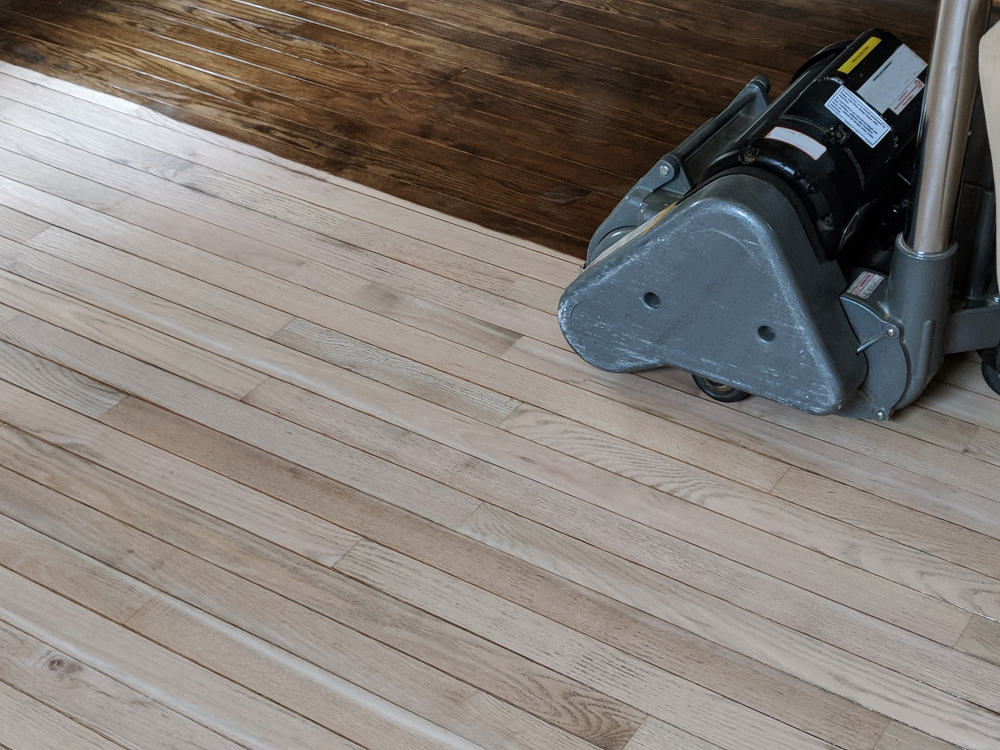
Residential LVP Flooring Installation, Bay Hill
It starts with a consultation. Before any product gets selected or any work gets scheduled, Geste walks the space with you looking at the subfloor condition, the layout, the lighting, and how the rooms connect. In a Bay Hill home with large open floor plans and natural light coming off the lake or the golf course, those details matter for product selection. The wrong plank width or finish in a space like that looks off immediately.
Once the product is chosen, the subfloor comes first. In Central Florida’s slab-on-grade construction which is standard throughout Bay Hill the concrete has to be assessed for moisture before anything goes down. That means actual testing, not a visual check. If the slab is emitting vapor above acceptable levels, a vapor barrier goes in. The subfloor also gets checked for flatness, because LVP tolerates very little variation. Any high spots or dips get corrected before installation begins.
After that, the planks acclimate to your home’s environment for at least 48 to 72 hours. Florida’s indoor climate especially with AC cycling against summer heat affects how the material behaves. Skipping acclimation is one of the most common reasons LVP fails within the first year. Once installation is complete, we do a full walkthrough with you, and the space gets cleaned up before we leave. No mess left behind, no follow-up calls needed to get it finished.

Ready to get started?
Waterproof Vinyl Plank Flooring, Bay Hill FL
We handle the full scope of a luxury vinyl plank installation not just the surface. That means subfloor evaluation and correction, moisture testing on your concrete slab, vapor barrier placement where needed, full installation with proper expansion gaps, and cleanup when the job is done. If your project includes staircases, we handle those in the same scope of work. You won’t need to find a second contractor to match the landing to the new floor.
For Bay Hill homes specifically, we recommend SPC (Stone Polymer Composite) core LVP. This is the right core type for lake-adjacent construction. It’s dimensionally stable through Florida’s humidity swings, fully waterproof at the core level, and holds up under the kind of active-lifestyle wear that Bay Hill homes see. Wear layer thickness matters too for high-traffic areas or homes with pets and active households, 20 mil or higher is the appropriate specification.
We use low-VOC installation products throughout. If you’re living in the home during or after the installation which most Bay Hill residents are that matters. The work is done under Florida DBPR licensing requirements and backed by a satisfaction guarantee. Every product decision and installation step is explained to you before it happens, so there are no surprises when the job is complete.

Is luxury vinyl plank flooring a good choice for Bay Hill homes near the lake?
For homes along or near the Butler Chain of Lakes Lake Tibet, Lake Chase, Lake Blanche LVP is genuinely one of the best flooring options available. The elevated water table in lake-adjacent areas of Bay Hill means concrete slabs are under consistent moisture pressure year-round. Traditional hardwood, even engineered hardwood, is vulnerable to that kind of sustained vapor exposure. LVP with an SPC core is not. The vinyl core is impervious to moisture, and when it’s installed with a proper vapor barrier and professional subfloor prep, it handles the conditions specific to lakefront and lake-adjacent construction in a way that most other flooring types simply can’t match.
That said, the product alone doesn’t make it work the installation does. A lakefront home in Bay Hill that gets LVP installed without moisture testing or a vapor barrier is still going to have problems, regardless of how good the planks are. The floor sits on top of the slab, and if the slab is pushing vapor upward, that moisture has to go somewhere. Done right, LVP in a Bay Hill lake-area home is a long-term, low-maintenance solution. Done wrong, it’s a floor replacement waiting to happen.
How do I know if my Bay Hill home's subfloor is ready for LVP installation?
Most Bay Hill homes were built on concrete slab foundations standard construction for southwest Orange County homes built from the 1970s through the 1990s. A slab that looks and feels dry isn’t necessarily ready for flooring. Concrete emits moisture vapor continuously, and in Florida’s climate, that rate can be high enough to cause problems under LVP even when the surface appears bone dry. The only way to know for certain is to test it using a calcium chloride test or a relative humidity probe, not a visual inspection.
Beyond moisture, the slab has to be flat. LVP tolerates no more than about 3/16 of an inch of variation over a 10-foot span. Bay Hill homes of the 1970s and 1980s vintage often have slabs that have settled unevenly over the decades, and those variations need to be corrected with floor leveling compound before installation begins. If that step gets skipped, you’ll feel it underfoot and see it in the finished floor within months. A proper pre-installation assessment covers both moisture and flatness and both have to pass before any planks go down.
How long does luxury vinyl plank flooring last in Florida's climate?
With professional installation and the right product for Florida conditions, LVP typically lasts 15 to 25 years in a residential setting. Premium SPC-core products with a 20 mil or thicker wear layer can reach 25 to 30 years under normal residential use. The lifespan is driven more by the installation quality and product specification than by the brand name on the box.
Florida’s climate does put specific demands on flooring. The combination of high outdoor humidity Orange County averages humidity in the 70 to 90 percent range year-round and air-conditioned interiors creates a constant cycle of expansion and contraction. LVP that wasn’t acclimated properly before installation, or that was installed without correct expansion gaps around the perimeter, tends to show problems within the first one to two years. Gapping, buckling, and popped seams are almost always installation errors, not product failures. When the installation is done correctly from the start, Florida’s climate is well within what a quality LVP floor is designed to handle.
Will LVP look right in a higher-end Bay Hill home, or does it look cheap?
This is one of the most common concerns from Bay Hill homeowners, and it’s a fair one. The honest answer is that it depends entirely on the product you choose and how it’s installed. Modern LVP at the premium end of the market wider planks, embossed textures, photographic print layers that replicate real wood grain is visually indistinguishable from hardwood in most residential settings. The difference is tactile, not visual, and even that gap has narrowed significantly in recent years.
What matters in a Bay Hill home specifically is matching the product to the scale of the space. Large, open floor plans with lake or golf course views and abundant natural light require wider planks and finishes that read well at a distance. A 5-inch plank that looks fine in a smaller room can feel busy and disconnected in a 3,000-square-foot open-concept layout. During our consultation, we walk through those decisions with you plank width, color, texture, and how the floor will read under your specific lighting conditions so the finished result looks like it belongs in your home, not like a budget substitute.
Does improper LVP installation void the manufacturer's warranty?
Yes, and this is something worth understanding before you hire anyone. Most LVP manufacturers require that installation follow their published guidelines which include specific requirements for subfloor flatness, moisture levels, expansion gaps, underlayment type, and acclimation time. If any of those steps are skipped or done incorrectly, the manufacturer can and typically will deny warranty claims, even if the product itself is defective.
This is one of the practical reasons why professional installation matters beyond just the quality of the finished floor. A licensed, experienced installer follows those manufacturer requirements as a matter of standard practice not as an extra step. When we install your floor, the work is done in a way that keeps your warranty intact. If something does go wrong with the product down the line, you have a valid claim to stand on. With an unlicensed installer or a DIY installation that skipped the subfloor prep, you typically don’t and you’re absorbing the full cost of any remediation yourself.
How long does a luxury vinyl plank flooring installation take in a typical Bay Hill home?
The timeline depends on the square footage, the condition of the existing subfloor, and whether stairs are included in the scope. For a typical Bay Hill home in the 2,000 to 3,500 square foot range, the installation itself usually takes two to three days once the subfloor is prepped and the planks have acclimated. Larger homes and Bay Hill has plenty in the 4,000 to 6,000 square foot range can run three to five days depending on layout complexity.
What adds time is subfloor work. If the existing slab needs leveling or if moisture readings come back high and a vapor barrier system needs to be properly staged, that adds a day before installation begins. The acclimation period 48 to 72 hours minimum for the planks to adjust to your home’s indoor climate is built into the schedule before any planks go down. This step is non-negotiable in Florida, where the difference between the outdoor humidity and your air-conditioned interior can be significant, especially during summer months. The full timeline gets discussed at the consultation stage so you know exactly what to expect before the project starts.
Other Services we provide in Bay Hill